

Alcohol abuse is dangerous for your health. To be consumed in moderation.
Sake is an emblematic alcoholic drink of Japan that intrigues. But one thing is certain: whether through its taste or the way it's enjoyed, sake offers its share of surprises.
Sake? What's that?
If you're in Japan, the term "sake" refers to alcoholic drinks in general. In France, however, we speak of sake to refer to what is actually called nihonshu, a preparation made from the fermentation of rice. The famous "rice alcohol".
While sake is generally referred to as "Japanese wine", it's nothing of the sort, and this drink would actually be more of a "Japanese beer". The mistake is mainly due to the fact that, unlike beer, sake isn't fizzy. But also because the fermentation process isn't identical, since it doesn't use malt.
Ranging between 7° and 20°, sake is the result of a fermentation of rice in spring water through an enzymatic process, thanks to the addition of a specific mould. We'll explain below.
There are about fifty types of rice usable for sake production. But here are the essential elements for its use: the grains must be relatively large, with an opaque white core at their centre (this is the starch, and therefore the sugar that will be turned into alcohol) and, on the contrary, have a low protein content.
Just like every alcohol, sake has different vintages and different appellations depending on the regions. Depending on the products and the production process, the drink can be raw or very refined. That's what makes it a product appreciated as much in high society as in rural settings.
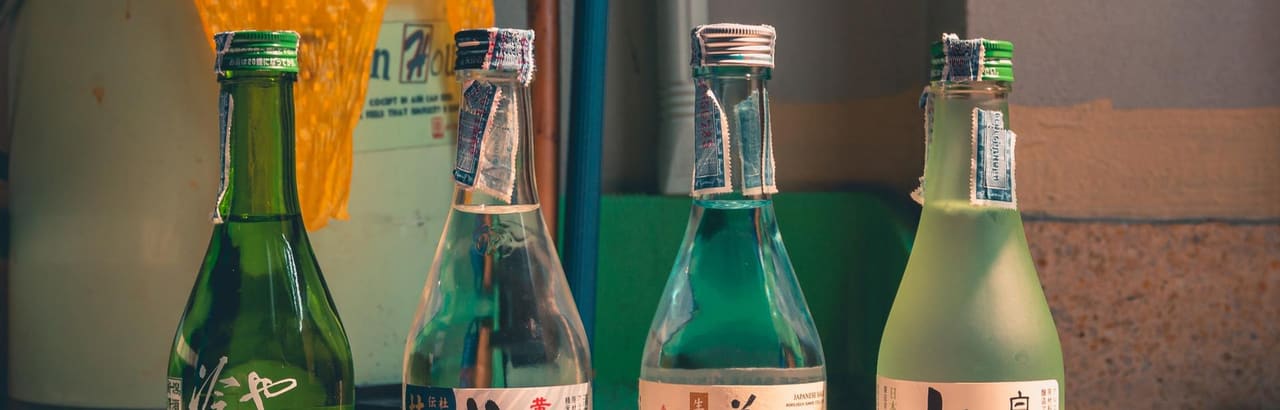
The origin of sake
Sake is one of the emblematic specialities of the Japanese peninsula, since it's been consumed for centuries upon centuries. This drink indeed arrived in Japan shortly after the first rice paddies were set up in the country by the Chinese in the 3rd century.
From the 8th century, the imperial court took an interest in sake and thus made it sacred, as did the main religions of the time, which now incorporated it into the various devotional rites.
By the 13th century, the whole country was already won over by this spirit and demand became extremely strong. Prices rose to such an extent that the price of sake exceeded that of its raw material, rice. The imperial court was no longer the main producer, and more and more temples produced their own sake.
Once very primitive (the rice grains were chewed), the production processes evolved greatly over the centuries until reaching a more refined version that gives us the most current form of this speciality from the 15th century. The demand for the quality of the selected products would keep growing over the years (notably during the Edo era) to provide us today with a sake of the greatest virtues.
3 factors were quickly defined to guarantee the quality of a good sake:
- the master brewer's know-how
- the quality of the water
- the quality of the rice and the degree of its polishing
But how is it really produced?
Its preparation
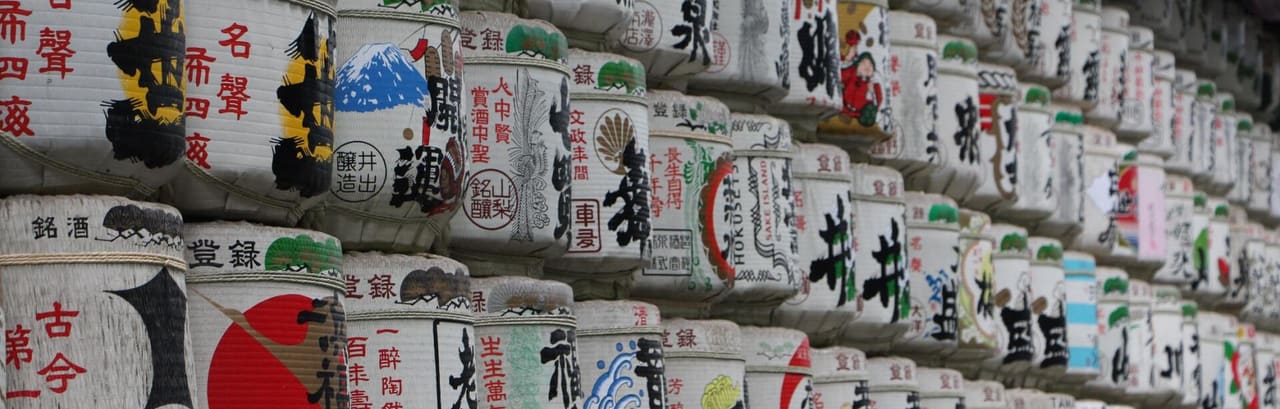
Sure, rice is the flagship element of the recipe, but it's not the main element for all that. No, sake is actually made up of 80% water — spring/mineral. Depending on its content of potassium, iron, phosphorus or manganese, the water will give more or less body to the substance.
The rice, which therefore corresponds to the remaining 20%, is generally harvested in autumn. The grains are polished until only the opaque white centre we mentioned above remains — the part most concentrated in starch. The more the grains are worked, the "finer" the sake will be.
The rice is then rinsed and plunged into mineral water to engorge it before steaming it. The next step is one of the most important, because it's what will trigger the fermentation reaction. A special mould (kōji-kin) is added, among other things, in order to develop the yeasts in the preparation so they turn the sugar into alcohol.
It all goes into fermentation for several weeks (generally in winter), before being pressed and filtered. The result is clarified with charcoal then pasteurised at least once before resting for a few more months.
The alcohol content of sake can be modified, notably when it's bottled, by adding water if necessary.
Now, all that's left is to enjoy it...
How to drink sake?
In Japanese culture, many actions are codified — this is the case for enjoying sake.
Kept in wooden barrels, it's then decanted into a bottle reserved for alcohols, called heishi. To offer it to guests, a service of several entirely dedicated pieces is used:
- Tokkuri: porcelain jug
- Chōshi: ceramic or metal jug, with a handle and a spout.
- Sakazuki: small, very flared porcelain cup for formal situations
- Guinomi: cup of about 6 to 8 cm in diameter for informal situations
- Choko: small cup of about 4 cm in diameter
- Masu: cubic wooden cup
Careful — you never serve yourself sake! Someone must do it for you, and you must serve your guests.
One of the particularities of this drink is that it can be enjoyed at different temperatures, cold or hot. Sake is drunk cold (from 5°) when it's a great vintage or during an aperitif. Conversely, it's favoured hot for sakes of lesser quality. It's thus heated to 50° and can then be used like a grog (since the preparation will have lost some of its alcohol content through evaporation).
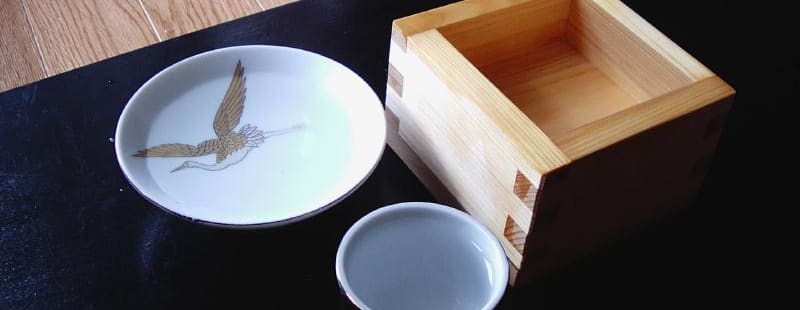
As you'll have understood, more than a drink, sake is a real emblem for the Japanese. It's found at every event and every Japanese celebration — traditional, even religious — in the private setting as well as during large public celebrations.
Alcohol abuse is dangerous for your health. To be consumed in moderation.


