

Although ahead in many fields, notably new technologies, Japan nonetheless continues to use thousand-year-old techniques. Fascinating know-how, notably around woodworking.
Ancestral processes
The art of wood joinery has been used for millennia. The first traces of this technique are found as early as the Jōmon era, which lies between 13,000 and 400 BC. This very specific know-how was passed down from generation to generation in carpenter families without ever being the subject of official writings before the 20th century! That's perhaps what makes the process even more incredible, beyond the technique: it was until then a well-kept secret.
Nejiri Arigata (the name of this art) developed and spread enormously from the 6th century with the arrival of Buddhism on the Japanese peninsula. Why? Quite simply because it's one of the main techniques used to build temples at that time. Several still-standing buildings were partly built with this method. This is notably the case of the seven great temples of Nanto in Nara, or the machiya houses of Kyoto.
The origin of Nejiri Arigata is attributed to the need to have buildings resistant to earthquakes, Japan being a heavily affected region originally. And you'll quickly understand why this method guarantees more solidity and safety by discovering its process.
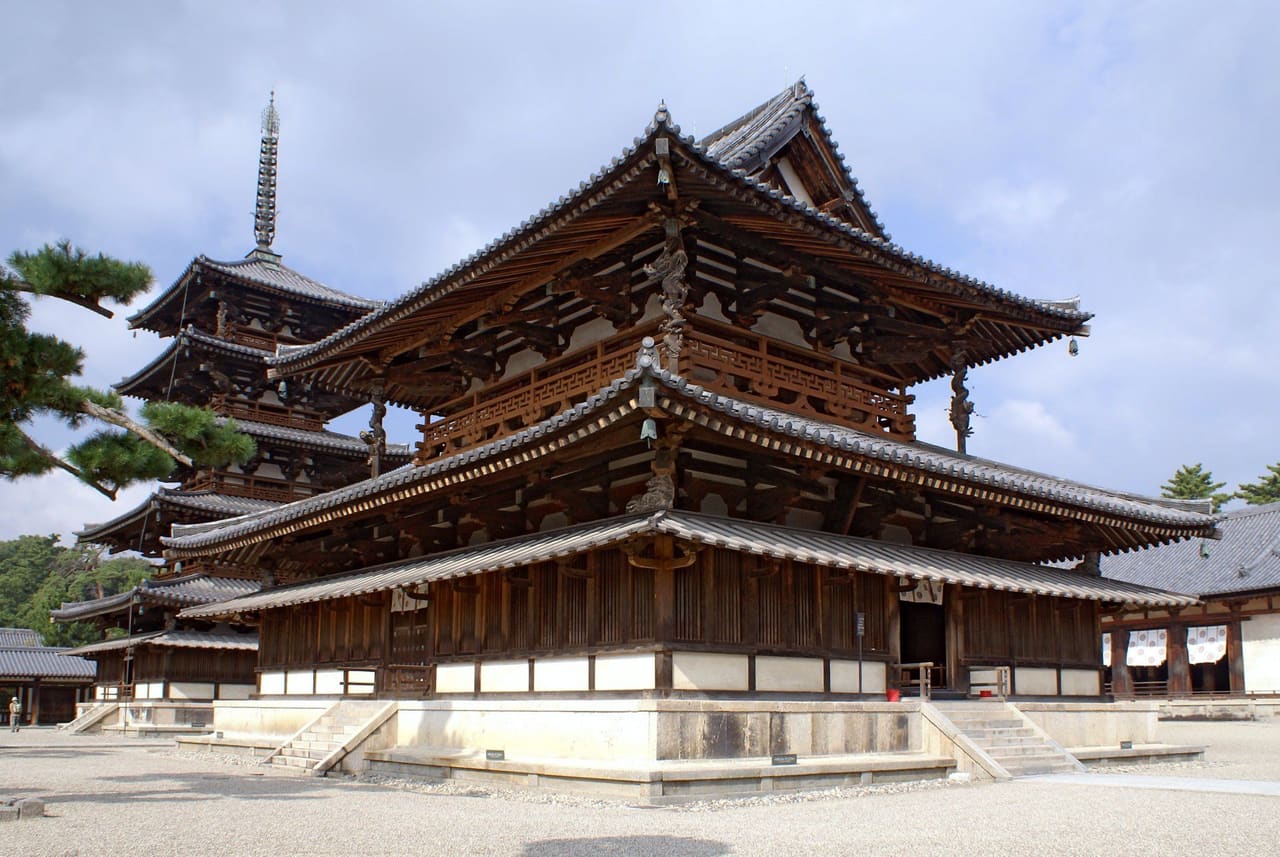
The principle of Nejiri Arigata
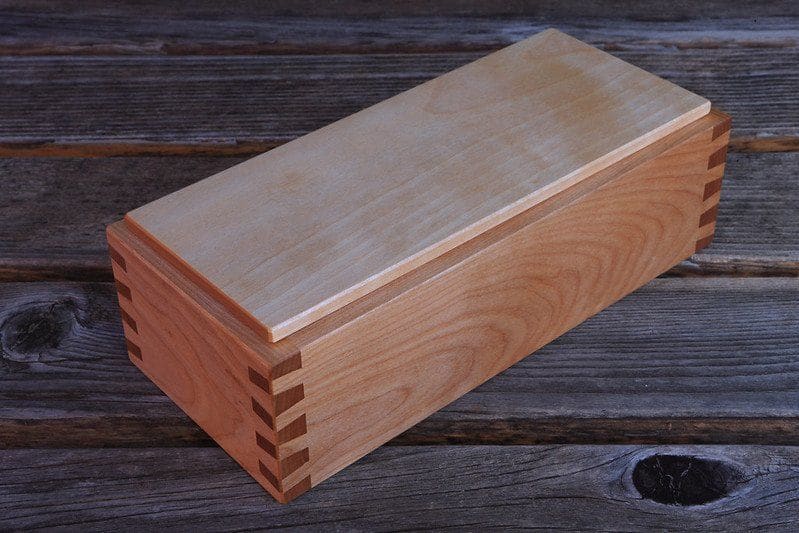
Nejiri Arigata is one of those carpentry techniques using mortise-and-tenon joints to assemble pieces of wood. Simply put, jointing is the act of perfectly assembling different pieces using interlocking systems. Of course, the reality is far more complex than a simplistic definition like this one, and many jointing techniques exist... but this lets you understand the principle. There are no fewer than 4,000 different assembly techniques with Nejiri Arigata.
In terms of equipment, once the wood is carved and the notches are ready, you need nothing else, and that's where Nejiri Arigata gets all its specificity. No need for nails, screws, glue or any other binder — the proper assembly of the pieces of wood is enough to guarantee a most resistant result.
This meticulous artisanal know-how and this woodworking, which one could describe as pre-industrial, therefore has the advantage of being extremely solid for the single, good reason that the wood will adapt, expand, contract, instead of breaking. So you understand its usefulness during an earthquake or other natural disasters.
And what about watertightness in all this? It's the compression of the wood, thanks to the precise cuts and methodical assembly, that takes care of making the building watertight. Each piece of wood is detailed by hand. Machines indeed couldn't give such a clean result. A whole host of special tools are used to create the notches, tongues and other grooves.
Each joint is then polished and reworked for an impeccable result. The goal is to enhance the various wooden elements without seeing the assembly parts sticking out.
A philosophy behind the technique
Beyond the incredible precision of this woodworking lies a real philosophy putting nature forward. Indeed, we find in several writings that Nejiri Arigata is above all a work with nature, with what it gives us, and not against it.
To understand better, you should know that initially, the wood used to build the frames and other furniture with this technique is dead wood found in the surroundings. You don't cut down trees to work it, but use what nature has left us.
The structure of the tree is also respected for construction. The wood at the base of the tree, more resistant, will be used to build the base of a building, and so on, going up to the top and therefore the top of the roof.
The wood is also not "thwarted". The joiner-carpenter adapts to the curvature of the pieces and their various roughnesses (notably the knots) to extract the parts he needs.
More fashionable than ever
For some time now, this type of assembly technique has been buzzing, notably on social media. The precision and technicality leave internet users stunned, and the videos showing the meticulous jointing of pieces of wood are on their way to becoming one of the best ways to relax on the Internet.
This type of content is found under the term tsugite in particular, which means "joint". Tsugite is also the name of a wood-cutting machine, developed to create pieces that fit together with precision.
Needless to add that contemporary architects have also seized this technique for their work — both for its resistance (we can never say it enough) and its aesthetic side.
We'll leave you with a most satisfying video to watch:


