

The ryokan is a typically Japanese inn. A kind of bubble of serenity, many Japanese and tourists love to stay there to recharge. Between minimalism and purely Japanese aesthetics, a night in these places seems essential during your trip to the Land of the Rising Sun.
The charm of a ryokan
Ryokans take up the architectural and decorative codes of most Japanese buildings. We told you about it precisely in an article on Japanese houses.
Ryokans are havens of peace and the atmosphere there is special, notably thanks to the design of the place, as you'll have gathered. Most elements are made of natural materials, more soothing and allowing you to reconnect with the essentials. So you'll find a lot of furniture and fittings in rice paper (for the sliding panels, for example), bamboo or other types of wood.
The spaces are thus delimited by sliding panels that let you soften the light, the floor is almost entirely covered with tatami and the decoration is very pared-back.
As for the personal spaces, the bedrooms, don't expect to find a big bed for your nights. Everyone indeed sleeps on futons in ryokans. It's moreover the house staff who move the furniture and roll out your futons during or after your dinner. They're folded away early in the morning.
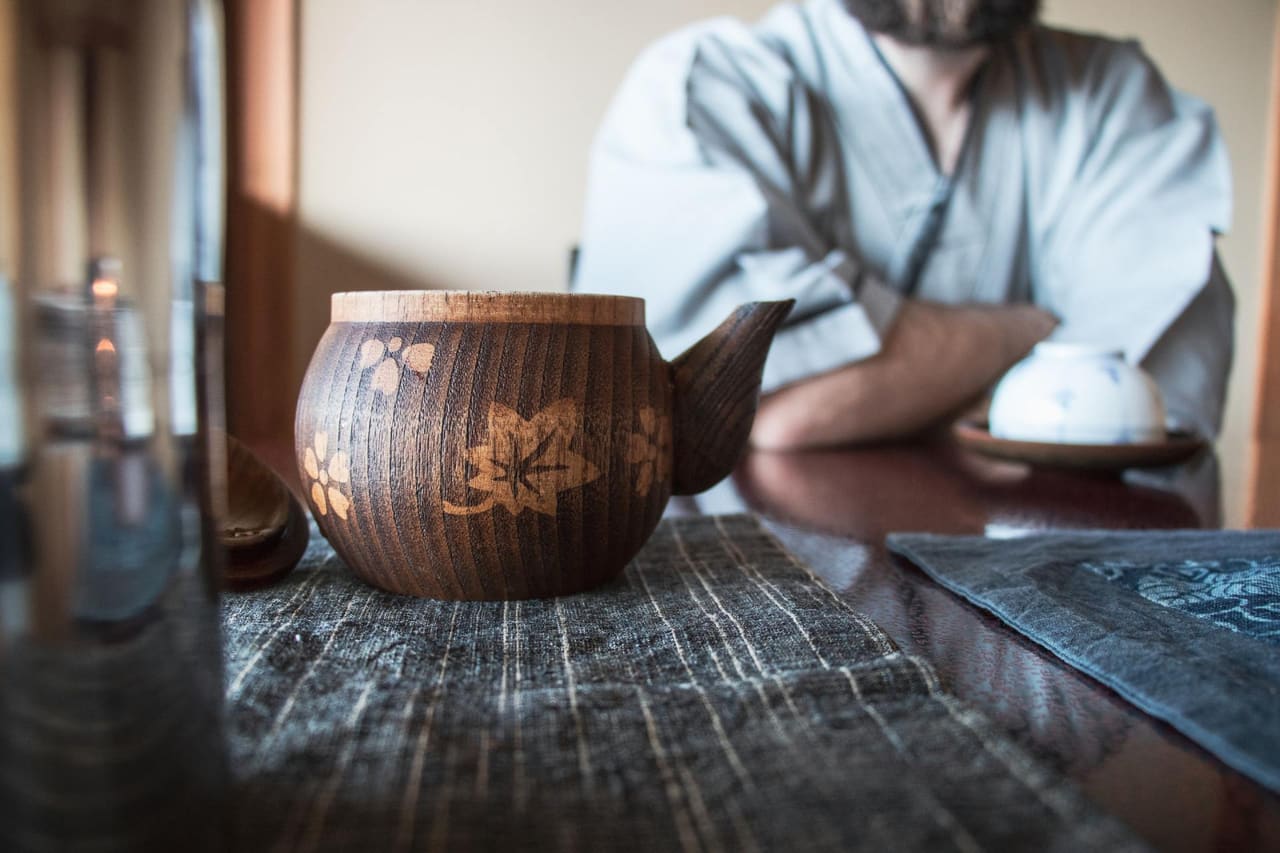
For the rest of the bedroom furniture, you'll find a low table in the centre of the room, around which you settle for meals, tea, games... There will also certainly be a small decorative alcove in a corner of the room. Generally displayed there are scrolls known as kakemono, or floral arrangements are placed there.
The rules to follow
In order to maintain the serenity of the place, quite a few rules are to be known and respected when you're thinking of spending a few days in a ryokan. This framework all the more ensures the immersive aspect of the experience. Nothing will be left to chance and you'll be able to relax fully.
- Arrival will be in the early or mid-afternoon
You should avoid arriving just to sleep or in a great rush at the end of the day. Most, moreover, don't have a night reception. The doors will be closed from 11 pm, with exceptions.
- You take off your shoes at the entrance
A vestibule making the transition between the outside and the inn is at the entrance of the ryokan. It's a carefully decorated spot that will plunge you straight into the atmosphere of the place. Slippers are often provided if you wish to use them to get around.
- Wait for the lady of the house (okamisan)
It's indeed she who will welcome you, show you around the ryokan and lead you to your space. Perhaps she'll also offer you a tea and a few welcome treats.
- Get changed
Tradition has it that every traveller wears the yukata. It's a light cotton kimono, white and blue. For the coldest seasons, you'll also have a haori, a jacket to wear over the kimono. Comfort guaranteed!
- Go to the bath
It's indeed customary to go to the bath before going to dinner in particular. There are worse rules, aren't there? Don't forget the little shower before entering the bath, and be careful, as most of them are not mixed. You'll put the yukata back on when you come out.
- Respect the dinner times
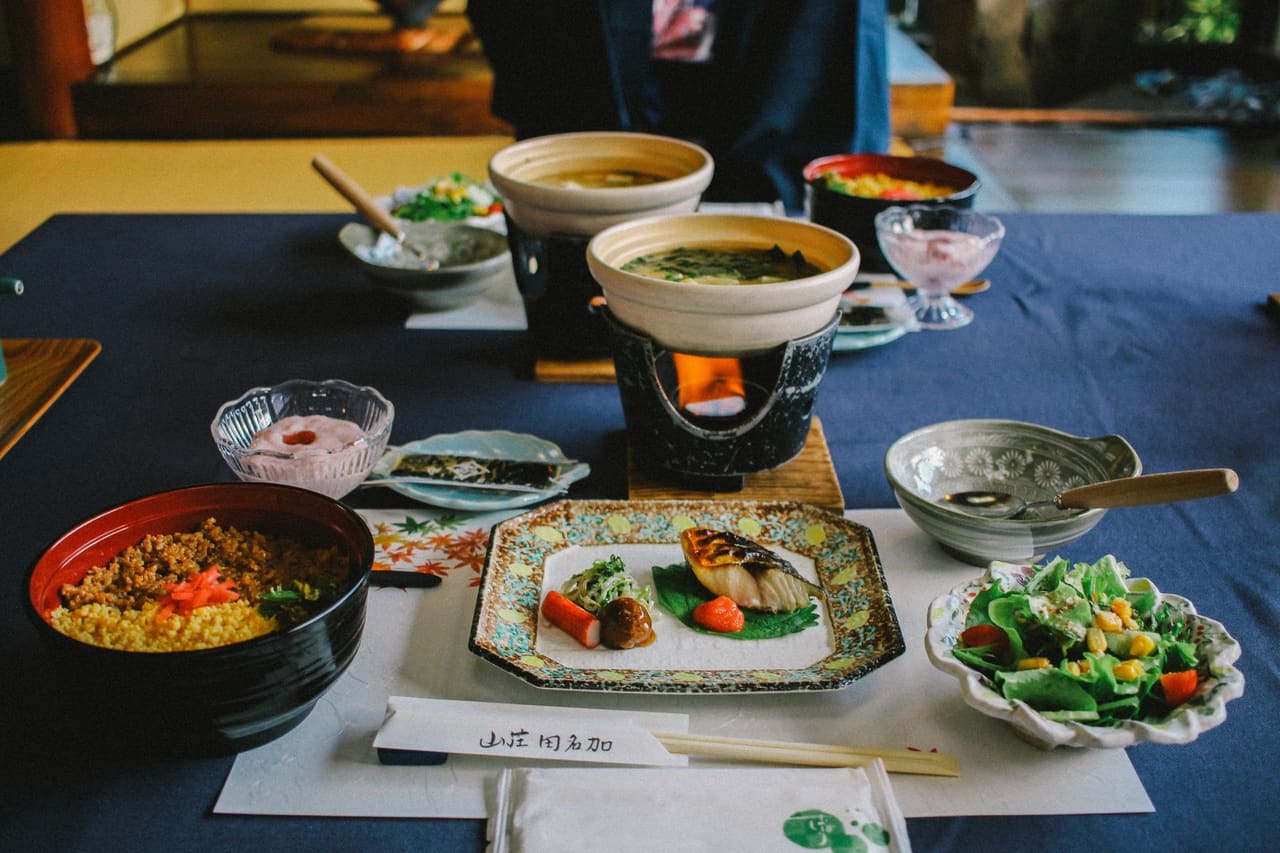
... which are served relatively early. Indeed, you'll be invited to have your evening meal from 6 pm, in the dining area or directly in your room. Several small dishes will be brought to you together — that's the principle of kaiseki cuisine. The quantities will be reasonable, for a healthy meal that respects seasonal produce.
- No lie-ins
Sure, you're here to rest... but it's not necessarily well regarded to stay in bed or in your room all morning. Take part in breakfast (which can still be delivered to your room), and join in the activities, visits, etc., from the start of the day.
Of course, not all contemporary ryokans are so strict about these rules. But know that in most, these traditions and marks of respect will be suggested and most appreciated. Live the experience to the full and immerse yourself in this art of living.
Although they are very widespread in the archipelago (more than 70,000), the concept has been widely exported all over the world, notably in France. You'll find some, in particular, around Annecy, Toulouse, in Rocamadour, Marseille, Cannes or Paris.


