

Whether they decorate gardens or interiors, bonsai have been inseparable from Japanese aesthetics for hundreds of years.
As cute as they are original, these little shrubs never stop charming us. Perhaps you have one yourself at home? So we're going to learn more about their history and, above all, how to care for them!
What is a bonsai?
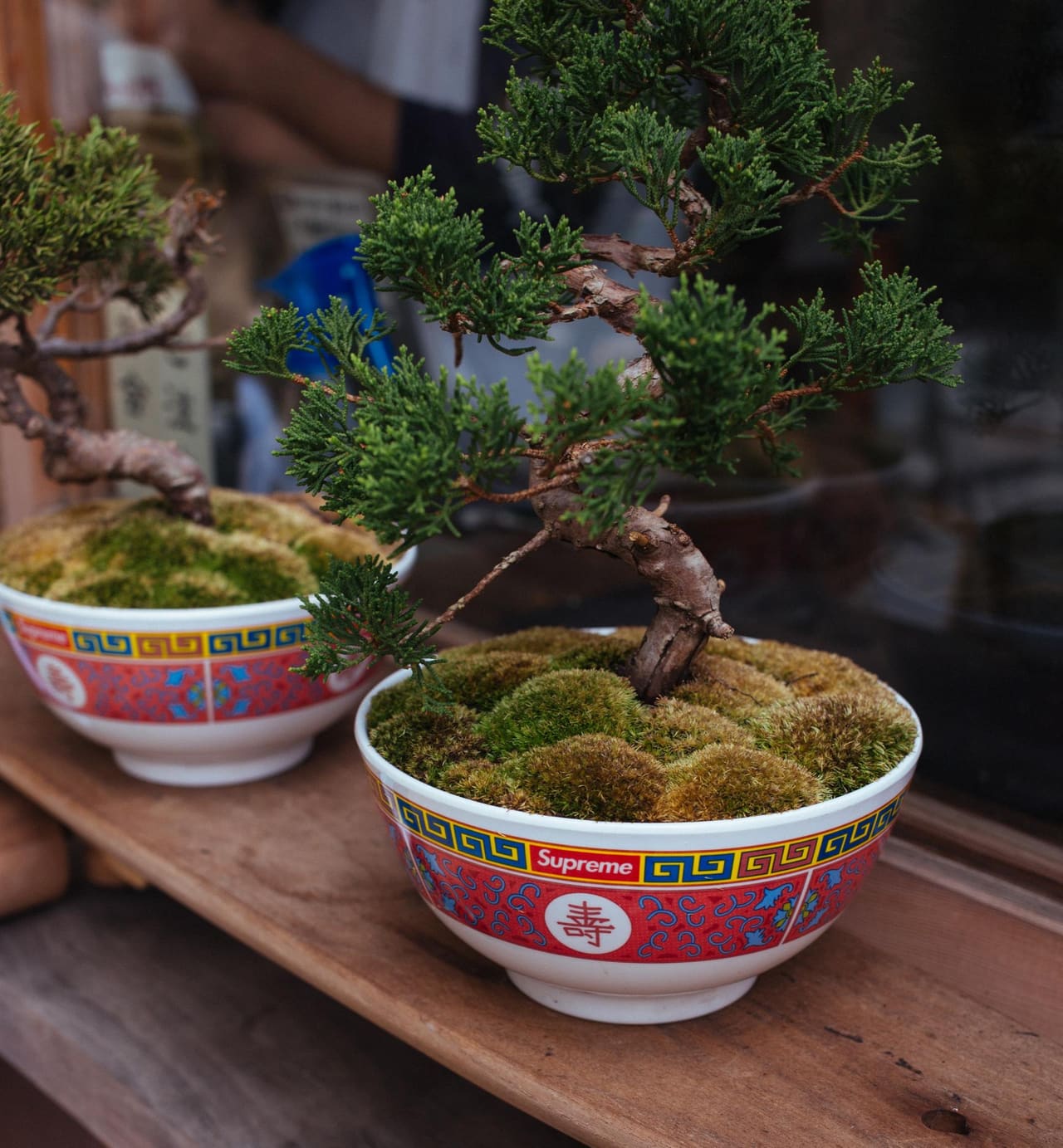
The bonsai (or bonzai) is a miniature version of a plant, whether a flowering plant or a shrub. Its size is generally between about ten centimetres and more than 1.20 m. That's why they're classified into different families, by height, but above all by the number of hands needed to carry them. We can distinguish 4 main categories:
- Mame: up to 13 cm tall / 1 hand
- Shōhin: up to 23 cm tall / 1 hand
- Kotate-mochi: up to 30 cm tall / 2 hands
- Chūmono: up to 60 cm tall / 2 hands
- Ōmono: from about 60 to 120 cm (or more for garden ornaments) / 4 hands
The chosen plant is miniaturised through pruning techniques or via the necessary supply of nutrients. The variety of shrubs will vary notably according to the chosen size, the location and the exposure devoted to it. We'll come back to this later.
Where do they come from?
The art of the Japanese bonsai actually has Chinese origins. As early as the 2nd century, in China, Penjing was practised — literally meaning "landscape in a pot" — for a purely aesthetic purpose. Frescoes from the 700s already depicted this type of cultivation.
The art of bonsai is therefore a derivative of it and, as with many other elements and traditions, it was the introduction of Buddhism to the peninsula that took charge of spreading this practice. So it's from the 9th century that Penjing became bonsai and won over the Japanese upper classes. The Buddhist religion and the art of bonsai are very linked, since one seeks balance, beauty and perfection in this technique.
A refined practice, then, it was initially reserved for the clergy and the Japanese nobility. It's from the 14th century, and thanks to its omnipresence in art and cultural depictions, that bonsai became more widespread and thus reached all classes.
At the beginnings of the Meiji era, in the 19th century, and accompanying the fashion for Orientalism, bonsai were imported into Europe for the first time. They were notably exhibited at the third World's Fair in Paris, in 1878. But it was only a hundred years later that bonsai were imported en masse to European countries. The fashion took off in the early 1980s.
How do I choose my bonsai?
Contrary to popular belief, almost all trees can be adapted into a miniature version and bonsai form. But then which variety to choose?
Although some are more popular than others, it's up to you to see what use you want to make of it and where you want to place it. You also have to think about the time you want to devote to it — it's not for nothing that it's said to be the favourite hobby of the elderly. If you indeed want to "raise" a bonsai properly, you'll need to arm yourself with patience. All the essence of this art is here.
If you're a beginner, you can opt for a small conifer in particular. Rather robust and with good growth, it'll let you "get the hang of it" without too much risk for the tree. You also have to take into account that the smaller the bonsai — and therefore the pot — the more attention you'll have to pay to its watering. The soil will indeed dry out more quickly. Small size, small problems... not so sure.
Besides the variety, the style is one of the most important things in choosing your bonsai. Indeed, let's remember, the bonsai is meant to be admired and pampered. It's therefore regrettable that most of the shrubs on the market are often quite similar. There are indeed many types of growth... and we have our favourites:
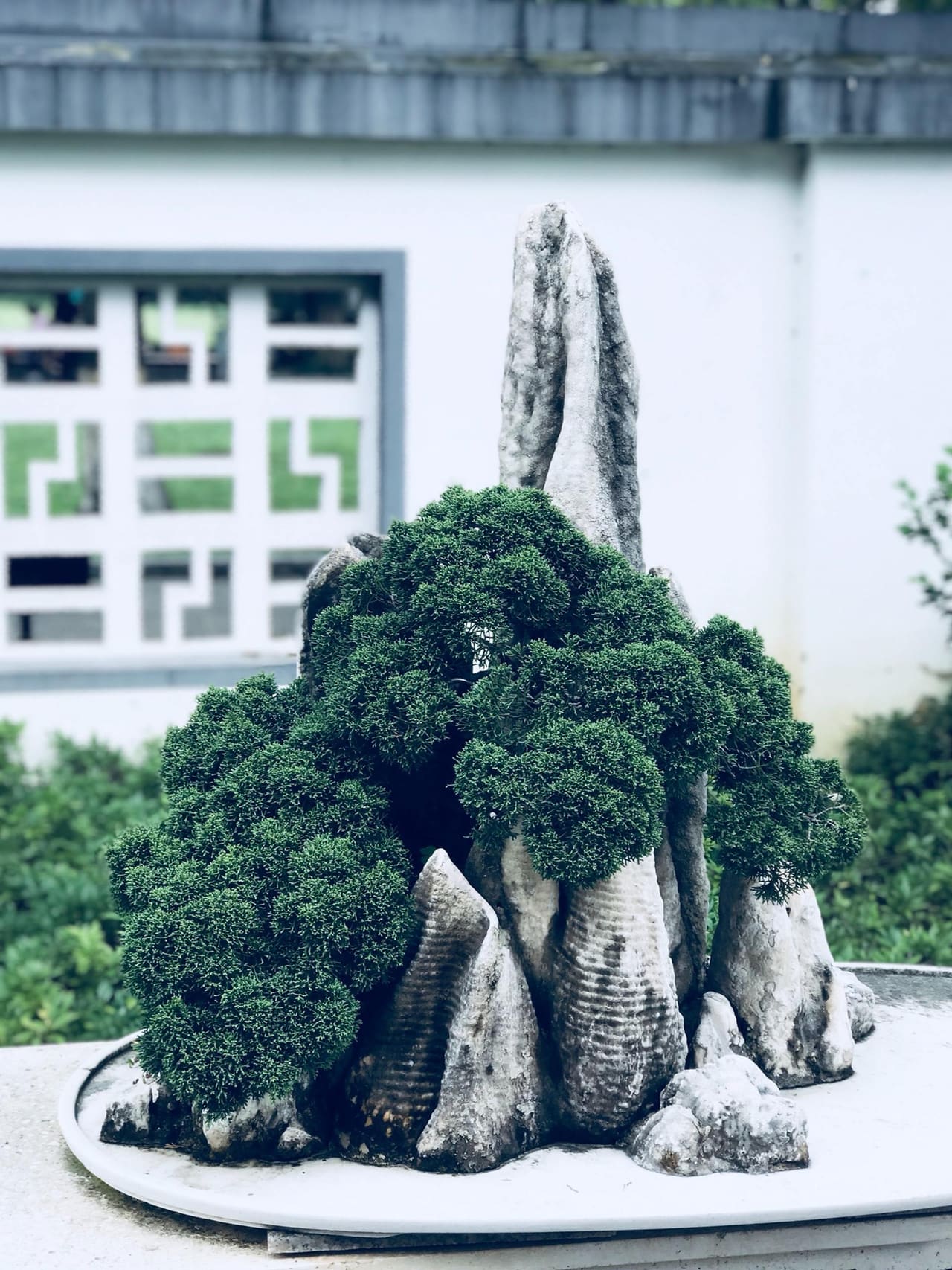
- the impressive sekijōju, whose roots wrap around a stone
- the mysterious sabamiki, with its split, even totally open trunk
- the original kengai, whose branches cascade, just like a trailing plant
Right, you have an idea of the bonsai of your dreams, so here are a few final tips to make sure you choose the right shrub:
- the roots must be well spread out in the pot and numerous (your tree's stability depends on it)
- the trunk must not show significant marks that could weaken it or expose it to disease
- even if it's twisted (on some varieties more than others), the trunk must taper regularly up to the top
- the branches must be evenly distributed and without great difference in size
- also check that the state of the leaves and buds matches the season
How do I care for my bonsai?
Just because it's small doesn't mean the bonsai needs less care. On the contrary, since its watering, for example, must be done regularly. A bonsai dries out quickly and that can have major consequences. So you won't leave your miniature tree without care during the holidays.
Pruning is also important, since it's what will let you keep the "dwarf" spirit of your plant. For a novice, the simplest is to start little by little, observing your tree and determining the shoots that need to be removed or trimmed. It can be those in poor condition, of course, but also those preventing you from getting the shape of your choice. Finally, for the shape precisely, you can use copper wires to guide your tree's growth. However, they can cause damage if left on for too long, as they'll embed themselves into the tree's trunk in particular.
Place your bonsai in a sheltered spot. It's rather fragile, so avoid draughts or direct exposure to bad weather. Finally, remember to renew the soil regularly, every 6 months, to help its development and provide the necessary sediments and minerals.
As with all plants, certain warning signs can alert you to your shrub's good health. That's why very particular attention is required. It's necessary to observe your bonsai, from every angle, regularly.
You indeed have to be attentive to changes in leaf colour (outside of seasonal phenomena). If they turn yellow or dry out, for example, there may be a care or pest problem. Turn the leaves over to make sure none of these have taken up residence in your bonsai. Gnats, spiders, caterpillars... The damage can be significant, since these little critters won't hesitate to nibble the leaves or the trunk either.
Also be attentive to the appearance of a "floury" deposit on your tree or the various unusual spots that can appear. These will be diseases that can lead your cute little companion... to rot.
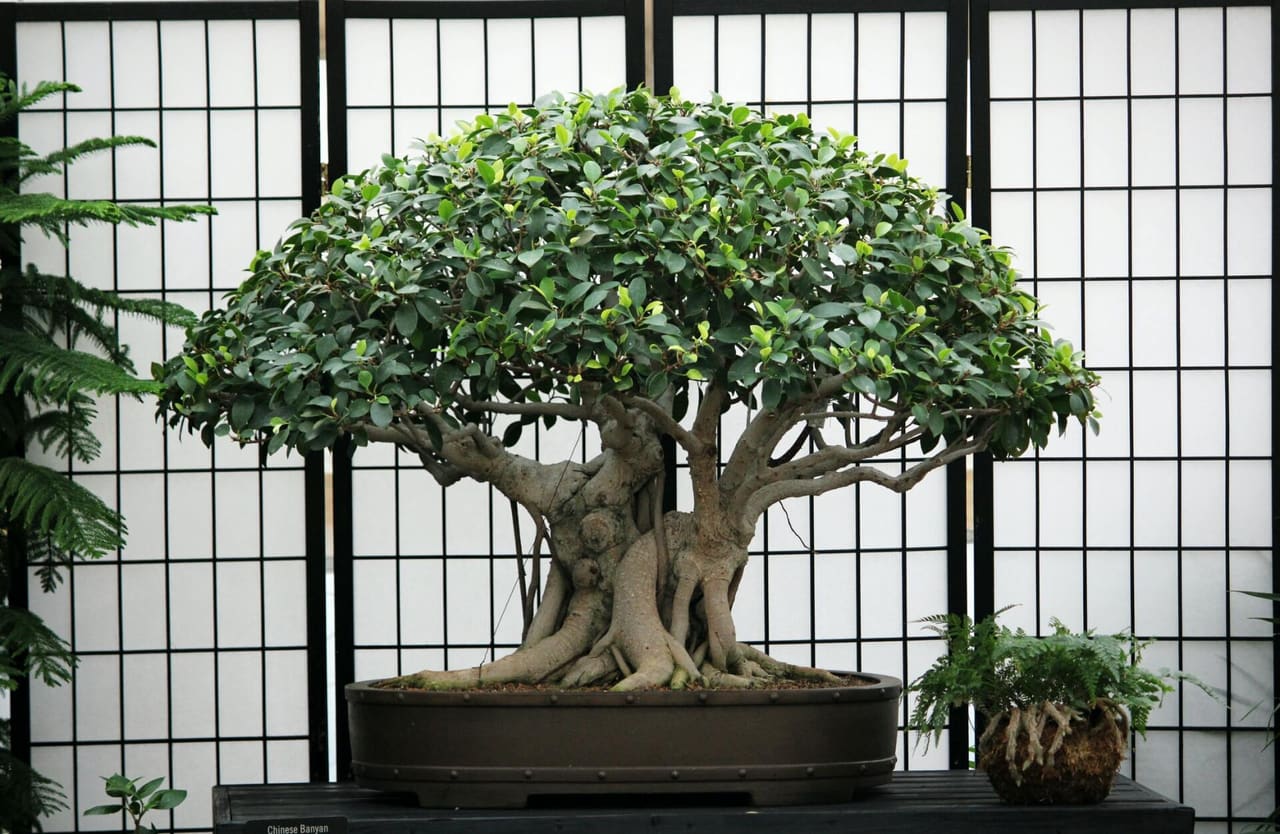
As you'll have understood, bonsai cultivation is ancestral and has charmed every era, to the point of becoming a true phenomenon all over the world in the 20th century. While it's still its aesthetic that pushes us to acquire one, you should nonetheless know that these dwarf trees need a lot of attention and care. But rest assured, they remain totally within reach, even for those who don't have green fingers!


